


The full version of this essay is available to paid subscribers of City of Yes. If you find this work enjoyable and valuable, please consider supporting it with a paid subscription. Thanks for reading!
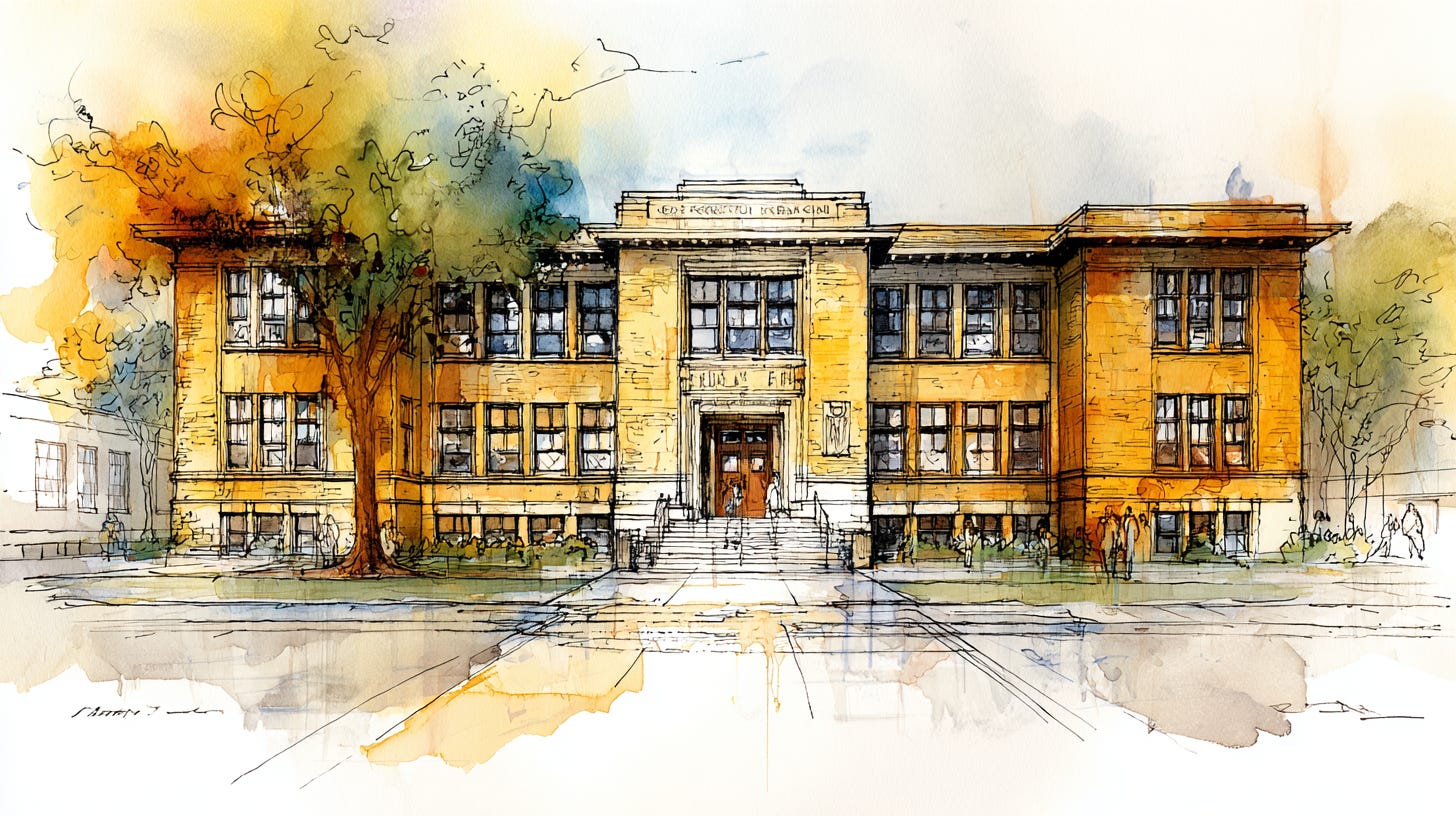
Blackshear Elementary School has anchored Central East Austin for more than a century. Founded in 1891 in what was then the Gregory Town freedom colony of former slaves, it later became one of several officially segregated schools for African-American students. The current building replaced the original one-room schoolhouse nearby in 1903 and continued to expand over the following century. In the 1930s, principal Friendly Rice instituted Austin’s first free lunch program, later adopted by the school district at large, and started one of the first public school libraries for black children in the entire South. Operating as a fine arts academy since 2015, its walls are covered in murals celebrating its history and community. A Texas Historical Site marker stands at the entrance to what is the Austin Independent School District’s oldest continuously operating elementary school.
Blackshear survived more than a century of segregation, urban renewal, gentrification, and demographic change—and after all that, it will close thanks to a district-wide budget crisis.1
Earlier this year, AISD announced that Blackshear will join a list of 10 other schools slated for closure and consolidation as the district grapples with a potential budget shortfall of $181 million. The district has been beset with a host of problems, the largest being a major drop in enrollment. Enrollment peaked at 83,000 in 2016 and then dropped by 7% in the first year of the pandemic. After losing 3,000 more students in the past year, enrollment stands at 69,000 students—a 17% drop over 10 years. For its part, Blackshear has capacity for 500 students, but enrollment was as low as 210 students in recent school years.
What’s going on?
The pandemic accelerated the decline as families that found alternatives during the disruption largely didn’t return. But the trend was already pointing downward, and the district deserves some blame for how it has managed the crisis. The school closure announcements have been erratic, and the district has backtracked on promises not to lay off school librarians, reversing course on the last day of school. With 88% of expenditures going to people, budget cuts inevitably hit jobs—but the chaos does not breed confidence.
Nevertheless, statewide data suggests this is not merely an Austin problem.
Across Texas, schools lost 76,000 students in the current academic year, the first non-pandemic enrollment decline in more than 40 years. What’s befuddling observers is that these declines are happening even as the City of Austin and the statewide populations have grown. Indeed, the Census just announced that Austin has officially passed the one-million resident mark, adding 4,000 new residents in 2025.
Of the students who disappeared, 81% were Hispanic, leading observers to blame anti-immigration rhetoric and policy, including ICE’s detention of Texas students. Meanwhile, despite gains in affordability, the cost of housing remains out of reach for many, with a dearth of starter homes potentially delaying family formation. Fertility is down across the state. Meanwhile, a new voucher program will launch later this year that is expected to reduce public school enrollment by 24,500. All of which is to say that there are structural, policy, and political headwinds facing Texas schools.
But the biggest headwind may be the way Texas has chosen to fund—or not fund—its schools.
