


This is the first City of Yes essay appearing with a paywall. If you’d like to read the full essay and support this work, you can upgrade below.
Bullets rained down on the streets of Austin less than twenty-four hours after bombs began falling on Iran. Three people were killed and thirteen others wounded when a gunman opened fire at a crowded Sixth Street bar early Sunday morning. Police killed him minutes later. At first the two events seemed unrelated: another mass shooting in America, tragic but familiar. Only later did details emerge suggesting the attack was symbolically tied to the war unfolding in the Middle East. Local leaders are fond of saying that Austin is a global city. Last weekend, the world came to Austin in a darker way.
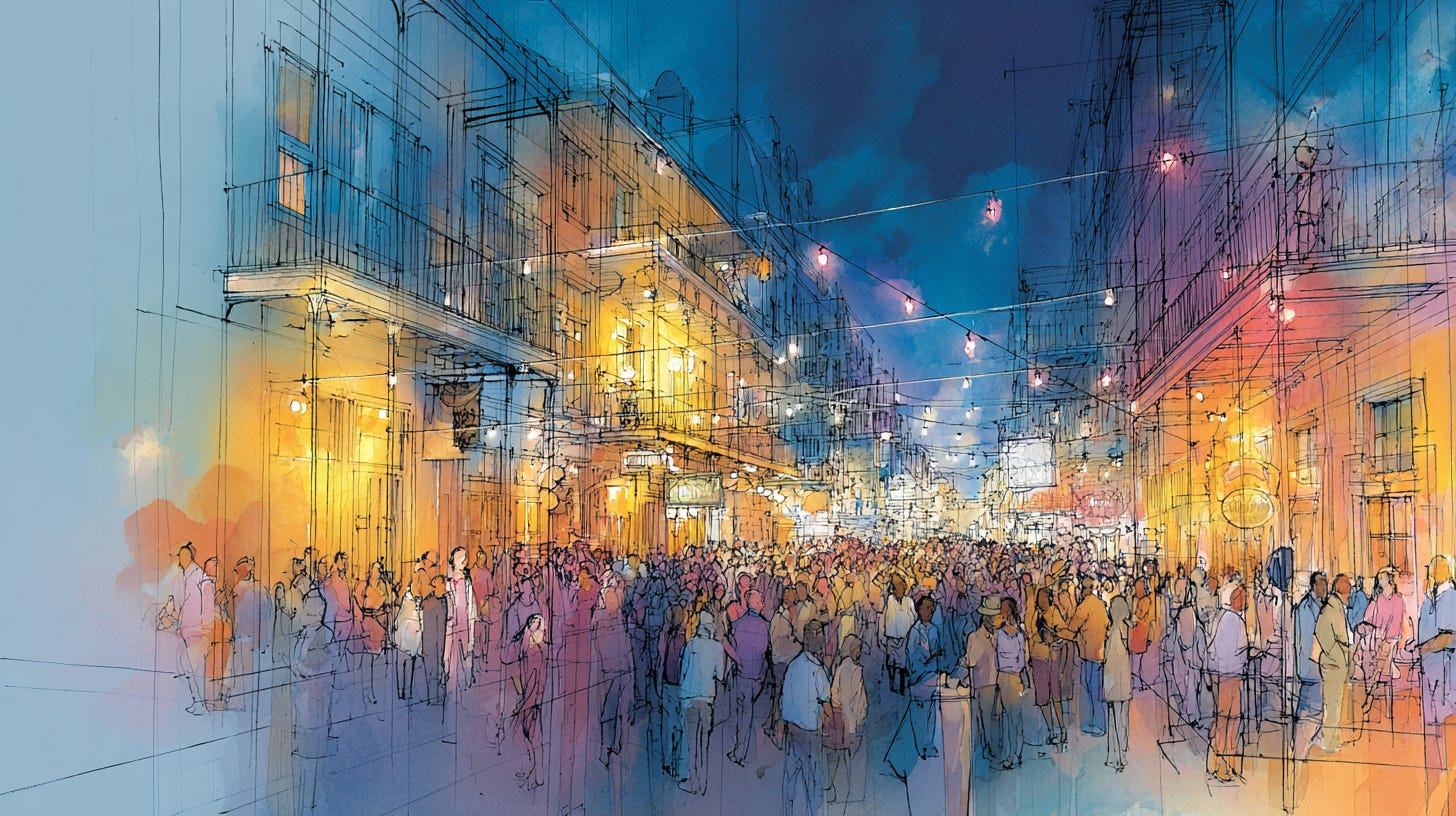
Yet if we look plainly at what happened on Sixth Street that morning, something deeper comes into view. The shooter meant to kill innocent people. But he also struck at the basic condition of city life: strangers gathering together in the same place, sharing the same streets, the same music, and the same night.
The shooting was an attack on the freedom of the city itself.
