


For more than a century, Bilbao’s blast furnaces belched billows of smoke into the air, coating its buildings in soot and polluting the Nervión River. Iron ore mined from the surrounding hills had turned Bilbao into a steelmaking and shipbuilding powerhouse, and the grime and smog were the price it paid to become the wealthiest city in Spain. After decades under the Franco dictatorship, the caudillo’s death in 1975 allowed the city to breathe politically—but economically and environmentally, Bilbao was already choking. Global competition, technological obsolescence, and the exhaustion of its iron ore reserves threatened its industrial base, while the Nervión had become an open-air sewer of human effluvia and industrial waste, ecologically dead. By the 1980s, unemployment had risen as high as 23%, the population was declining for the first time in the city’s modern history, and Bilbao was beset by labor unrest, drugs, and terrorism from the Basque separatist organization ETA. Then, in August 1983, torrential rains overwhelmed its dilapidated drainage system, submerging the historic Casco Viejo beneath as much as three meters of water. To say the city’s outlook was underwater would be an understatement.
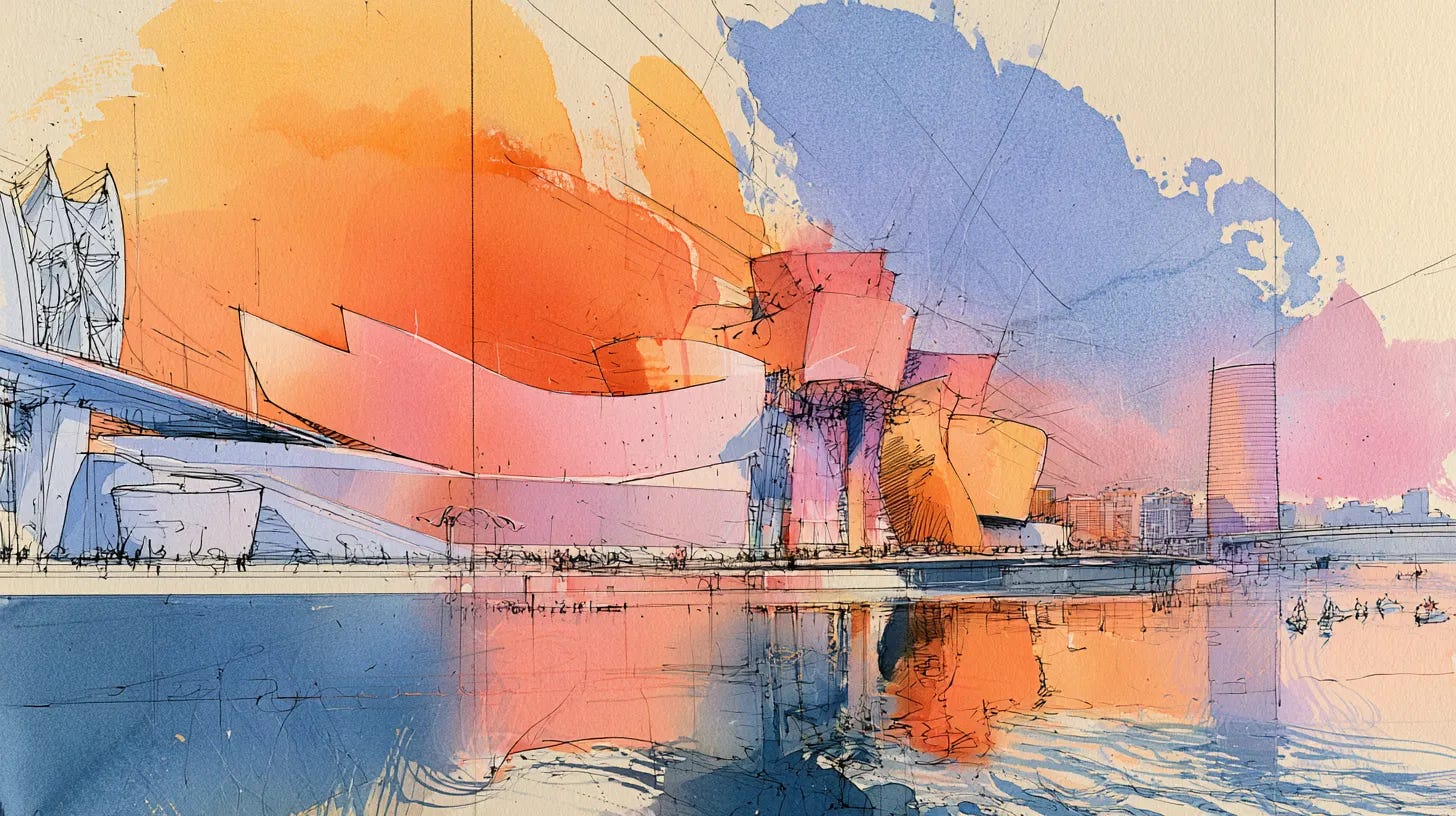
Less than fifteen years later, sunlight shimmered off the “voluptuous curves” of Frank Gehry’s new Guggenheim Museum, the river sparkled, and the city had gained a reputation for urban revitalization. The economy had rebounded, unemployment had fallen, and tourists were arriving in droves. The New York Times called Bilbao’s transformation a “Cinderella story,” with the museum as its titanium slipper. More commonly, it’s known as the “Guggenheim effect.”
Cities around the world have attempted—and mostly failed—to replicate it. That’s because they have fundamentally misunderstood what Bilbao did. Indeed, Bilbao’s success owes not so much to its titanium-plated museum as to a restaurant table.
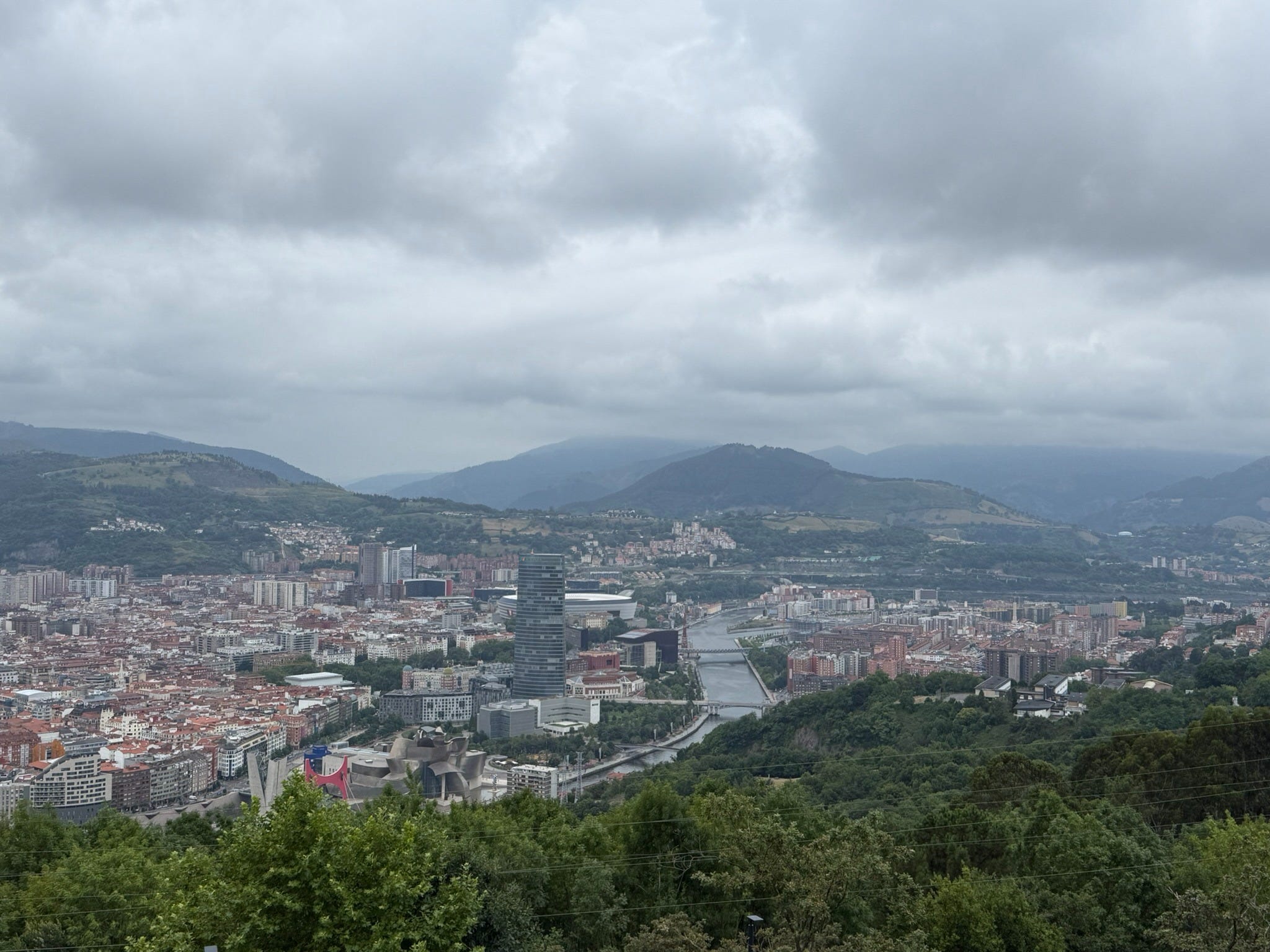
The decline of Bilbao’s industrial base, the loss of 60,000 manufacturing jobs, and population loss had already convinced city leaders that something needed to change before the 1983 flood provided a catalyst for action. What emerged was a redevelopment plan that would tackle the city’s economic and environmental problems at scale: what was left of the steel and shipbuilding industries would be cleared from the riverbanks, railways that had cleaved through the city center would be rerouted, and the port would be relocated to the mouth of the river some fourteen kilometers downstream, where it met the Bay of Biscay. The city would finally build an underground metro—an idea first proposed in the 1920s—along with a tram to ease longstanding bottlenecks between the outer boroughs and the central city. Meanwhile, the river itself would undergo a massive cleanup and restoration, space along its banks would be reclaimed from wharves and railways and parking lots to create a 7.5-kilometer riverfront promenade, and the acres of contaminated land along the river would be cleaned up and sold for redevelopment. For a city that had long turned its back on the river, the Nervión was transformed from the city’s sewer into its spine.
Financially, it was a heavy lift. Bilbao financed different pieces through different mechanisms, but the most distinctive was its use of land value capture. By rezoning and decontaminating the land, the government was able to pay for public improvements funded by loans backed by the eventual sale of the upgraded and revalued land to private developers. Proceeds were then invested into the next phase of infrastructure, including €1.4 billion for the metro, €1.5 billion for the road network, €190 million for the airport, €28 million for the tram—and, later, €133 million for the Guggenheim Museum. The nearly €1-billion cleanup of the river was funded in part by user fees, while the new port’s debt was paid from profits. Altogether, the public investment in Bilbao totaled around €6 billion.
What made all this work was that most of the land in question was owned by the government—all four of them. Indeed, the rebuilding of Bilbao was a coordinated effort of the Spanish government via the Ministry of Transport and Public Works, the Basque regional government, the Provincial Council of Biscay, and Bilbao City Council. Together, these organizations created the 1991 Strategic Plan for the Revitalization of Metropolitan Bilbao, a master plan that would be executed by two purpose-built agencies: Bilbao Ría 2000, which managed the land and infrastructure redevelopment, and Bilbao Metrópoli-30, which coordinated strategic planning and public-private participation.
Bilbao Ría 2000—named after the estuary Bilbao sits on to underscore the regional approach—was set up as a limited liability company whose board comprised members from each government and was chaired by the mayor of Bilbao. Importantly, although the participating governments contributed different amounts of land and held different shares in Bilbao Ría 2000, ownership split evenly between Madrid and the Basque institutions, decisions were to be made by consensus, and profits were to be reinvested in Bilbao’s redevelopment. Working not only across different levels of government but also political parties, Mayor Josu Ortuondo, Deputy Mayor Ibon Areso, and managing director Pablo Otaola understood that the success of the project relied on eliminating egos and building camaraderie among board members.
Their solution? Three-hour lunches in Bilbao’s restaurants, where the board members could discuss business over a meal and then spend the sobremesa afterward getting to know one another. Because each government controlled some essential piece of the transformation, consensus could have become a recipe for paralysis—or descended into squabbles for crumbs. Instead, the lunches turned institutional interdependence into personal trust, keeping the governments aligned as they delivered projects like the metro and the museum on time and on budget.
It was in this context that the Guggenheim opportunity emerged and became viable—over another restaurant table in Bilbao’s Old Town in December 1991.
Many bilbaínos were opposed to the museum project—not only because of the huge sums the government was committing—but because they saw it as an extension of American imperialism. Some derided it as “MacGuggenheim,” but the more common view was that it was “delirium.” As for the funds themselves, the city would be committing to not only providing the land, but to building and landscaping the museum, as well as buying the artwork and access to the Guggenheim Foundation’s collection and support. Essentially, Bilbao commissioned a work of sculptural artwork that the city would own but the Guggenheim would run. PricewaterhouseCoopers estimated that it would take the city twenty years to recoup its investment if the museum was lucky enough to reach half-a-million visitors per year.
Guggenheim Bilbao proved to be a smashing success, with first-year visitors reaching 1.36 million and typically around 1 million annually since. A survey by KPMG Peat Marwick found that in its first year, the Guggenheim increased GDP in the wider Basque Country by €144 million and generated nearly 4,000 jobs—about the same number that the shipyard that used to occupy the same spot supported at its height. Former Deputy Mayor (and later Mayor) Ibon Areso contends that the increase in public funds paid for the building within its first three years and for the entire investment within five.
The Guggenheim would become the enduring, international symbol of Bilbao’s turnaround—as well as a totem.
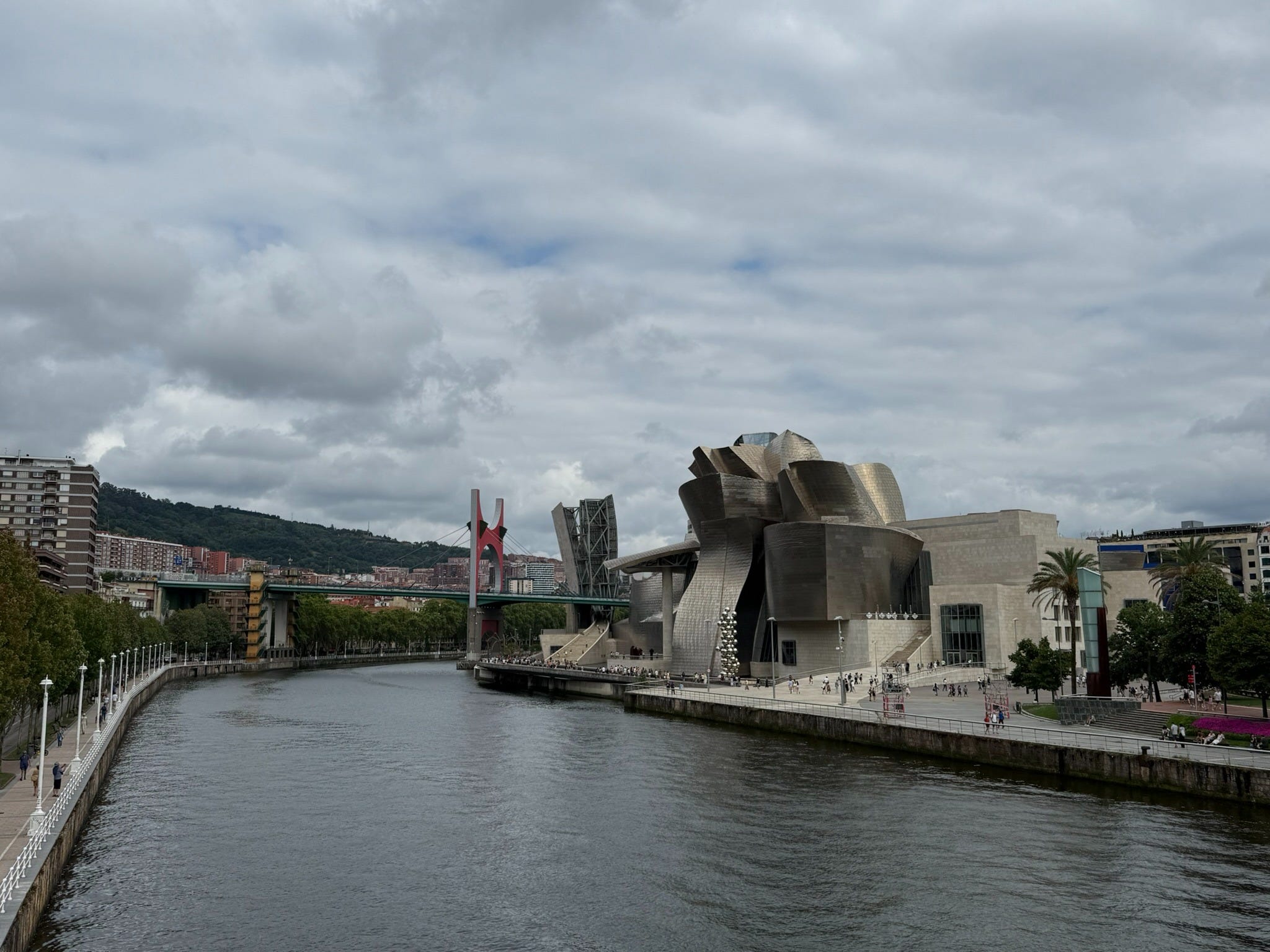
Every city wants its Sydney Opera House, Empire State Building, or Louvre, and scores have attempted to recreate the so-called “Guggenheim effect” with a cargo-cult mentality: if we build an icon, they will come. In Spain alone, several cities have tried and failed to mimic Bilbao’s iconic success: Santiago de Compostela’s City of Culture of Galicia, Avilés’s Centro Niemeyer, and Valencia’s City of Arts and Sciences experienced development problems and cost overruns, underperforming expectations on tourism and revitalization. The Guggenheim itself has tried to recapture lightning in a bottle, with a twenty-year-long project in Abu Dhabi still not open. Denver, Rome, and Dundee have all taken their turns chasing the same lightning.
It’s easy to see how other cities might reverse the Guggenheim cause-and-effect. Many of the projects initiated under the master plan were long-term or invisible: the metro was literally underground, and so its impact on the local economy was largely invisible to the naked foreign eye. Indeed, the completion of the metro in 1995, two years before the Guggenheim opened, served as confirmation to the beleaguered bilbaínos that their city was not doomed and that their government was capable of delivering results. The locals even affectionately dubbed the glassy, tubelike station entrances “Fosteritos” after their designer, Norman Foster, celebrating the city’s new, forward-looking self-image.
Certainly, the economic impact of the museum is meaningful, but it alone does not explain the broader impact on the economy. The per capita GDP of Bilbao more than doubled between 1996 and 2015, dramatically outperforming Spain as a whole. Regional unemployment halved from the early 1990s to the Great Recession, again besting the rest of the country. The Basque Country remains one of the most prosperous in Spain not only because it retooled its economy around tourism and services, but because the government made major investments in a higher-skilled workforce through retraining and education that have also allowed it to build up its innovation, aeronautics, and other knowledge-intensive sectors.
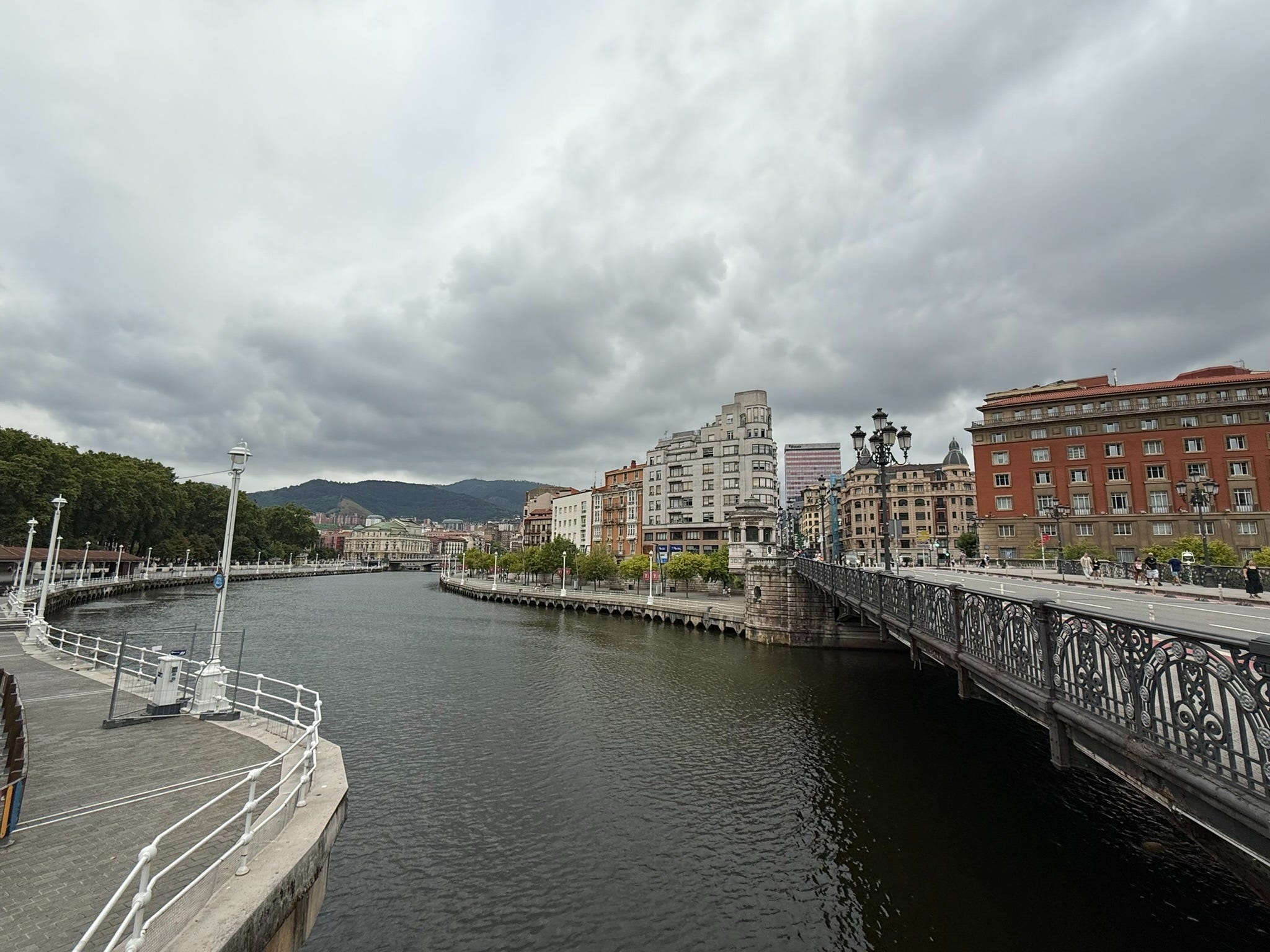
And while the Guggenheim put Bilbao on the proverbial map, it already existed on actual maps for 700 years. Today’s tourists can explore its historic bones, roaming medieval streets in search of pintxos or sitting in the street cafés of the 19th-century Ensanche neighborhood. The world saw the shiny new thing, missing that it was the grittier city around it that had made it possible.
That’s not to diminish the importance of the Guggenheim to the city: it certainly brought Bilbao international acclaim and tourism dollars that only further galvanized the city’s transformation into a modern, vibrant metropolis. But the Guggenheim was the capstone of a much broader investment in the public realm of Bilbao, of which the museum was only one part—and which was itself only one part of a broader vision to reimagine the city’s transportation network, industrial base, and education system. Ultimately, the story of Bilbao’s success is not about one museum. It’s about political cooperation and political will, and what is possible when those forces align toward a common vision of a better future.
The cause of Bilbao’s success was not the visionary design of a single building, but of the trust forged over restaurant tables. The Guggenheim was merely its most spectacular effect.
City of Yes is a reader-supported publication. If you find this work valuable, please consider becoming a paid subscriber. Thank you for your support!
I understand the theory behind land value capture, but the numbers seem extraordinary.
Personal trust and political will are, unfortunately, in short supply these days.