



If you are reading this on a screen, you are accessing a data center. If you’ve sent a text, made a phone call, hailed an Uber, used Google Maps, posted a selfie to Instagram or a vid to TikTok, or did anything else on your smartphone, you’ve used a data center. You’ve used a data center if you’ve swiped right on Tinder, blocked a hookup on Grindr, trolled a stranger on X, or doomscrolled on Bluesky. If you’ve purchased handmade jewelry on Etsy, bought heirloom tomatoes at Whole Foods, or filled a prescription for antidepressants at CVS—guess what? You’ve used a data center. Behind every click, scan, and swipe, behind every financial transaction, data centers are the invisible but essential infrastructure that powers modern technological life.
Are we about to ban them?
City of Yes is a reader-supported publication. If you find this work valuable, please consider becoming a paid subscriber. Thank you for your support!
While data centers have been around for decades, the rapid rise of artificial intelligence (AI) has changed their size and impact—and the politics around them. Already, some 575 restrictions across 46 states have been placed on data centers, from temporary pauses to moratoriums to outright bans. The issue has become bipartisan, with New York’s Kathy Hochul imposing a moratorium on large data centers, and Texas’s Greg Abbott pausing grid approvals for new ones. It’s no wonder that politicians have jumped on the bandwagon: a recent NBC News poll found that 69% of respondents oppose building AI data centers nearby, while a Gallup poll found that more people would rather live near a nuclear power plant than a data center. Public concerns have mostly been about costs and quality of life: in a Quinnipiac poll, 72% of respondents cited electricity costs, 64% water, and 41% noise. Others object to unsightly transmission lines and potential threats to sensitive sites; some opposition is just old-fashioned Nimbyism, and then there’s widespread unease about AI itself.
Given all that, it’s simply good politics to be against data centers.
But good politics is often the handmaiden of bad policy. Data centers create real impacts, but neither the use nor the impacts are unique: electricity demand, water consumption, noise, pollution, and land use can all be measured and regulated. The backlash is instead steering cities toward categorical bans that discount the benefits, fail to solve the underlying problems, and push projects into places with even less regulatory authority.
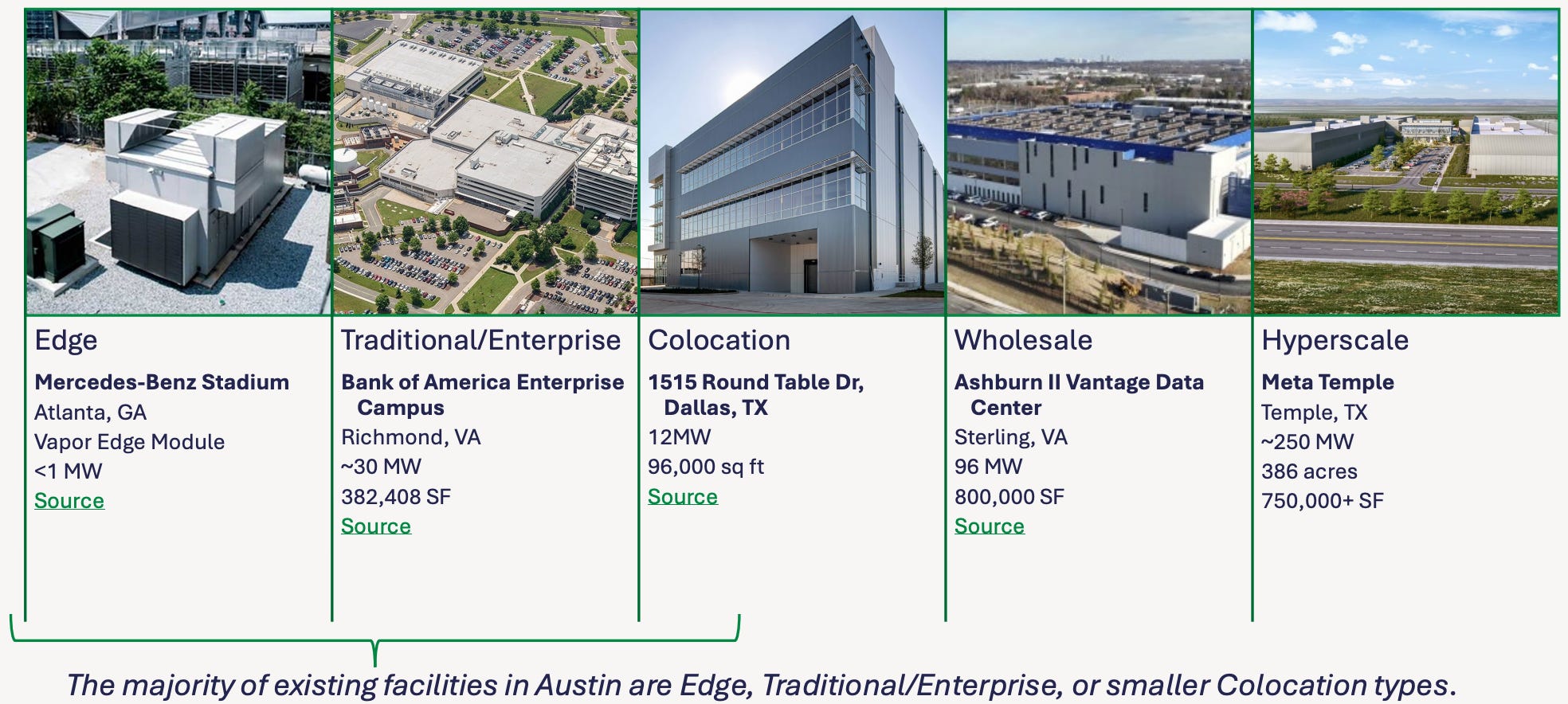
Texas has 308 operating data centers and is poised, by 2030, to overtake Virginia as the largest data center market in the world, so it’s a helpful dataset for drawing some general conclusions about their impact. The data centers we all use and the ones driving the backlash differ mainly in scale, but the terms used to describe them have no fixed legal meaning. Austin Energy defines five ranges based on wattage capacity, building floor area, and site size, but even those brackets overlap. Traditional data centers are generally those with loads up to 30 megawatts (MW), or about 1% of the utility’s peak load. For reference, one MW typically serves about 250 homes. For its part, the state defines “large load” customers as those requiring 75 MW or more. The data centers provoking the current backlash are in the “hyperscale” bracket, with capacities of 100 to 1000 MW. City staff report that the statewide grid regulator, ERCOT, routinely receives requests for new centers reaching 300 MW, with some even seeking 5 to 11 gigawatts (GW), compared with Austin Energy’s peak load of roughly 3 GW. By comparison, Austin’s ten existing data centers range from just 1 to 20 MW.
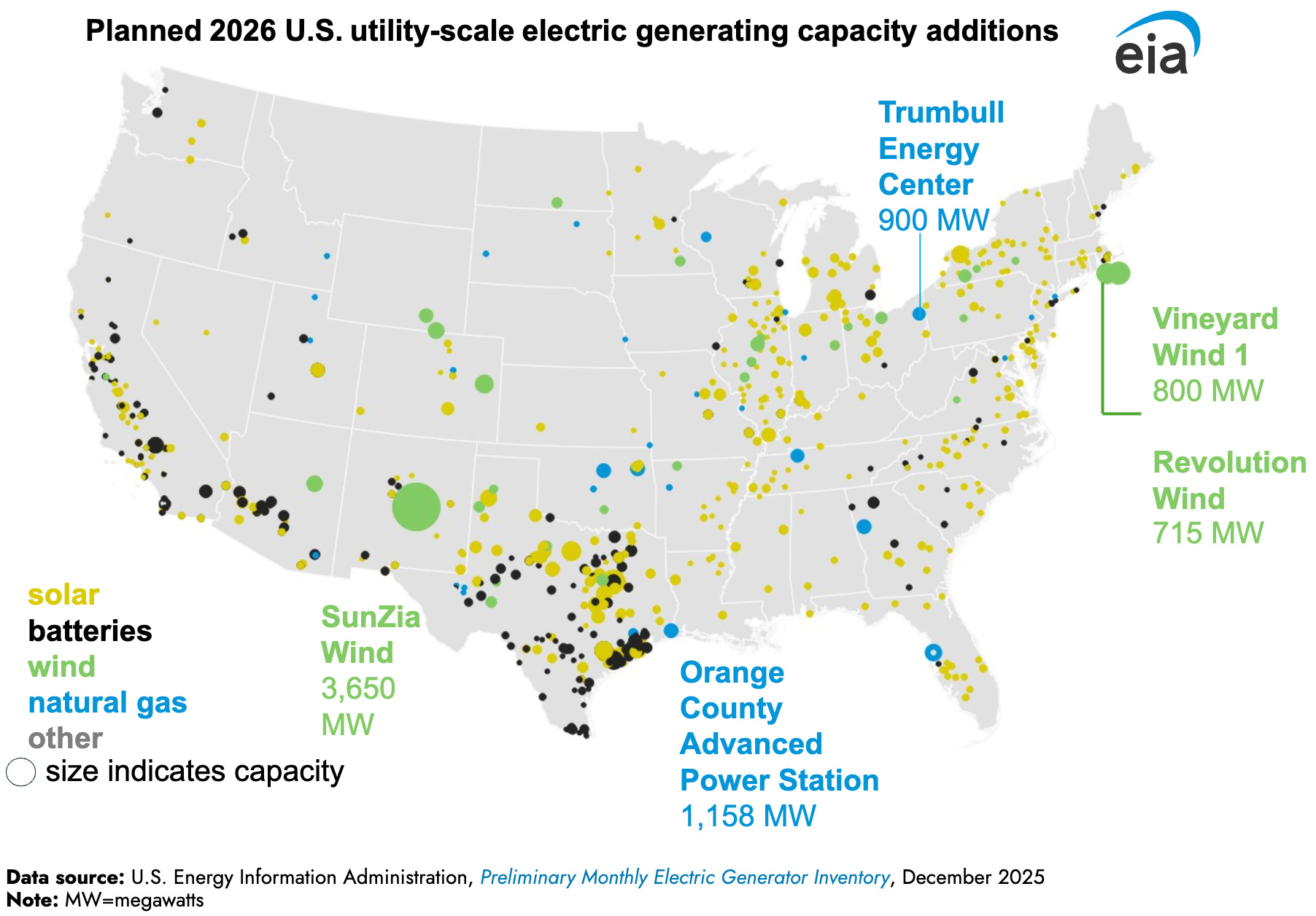
At that scale, grid capacity becomes the central infrastructure problem. A 300 MW campus would equal about 10% of Austin Energy’s peak load. ERCOT has received inquiries for more than 730 projects totaling 474 GW, versus its all-time peak demand of 91 GW, though officials caution that much of that represents speculative duplicate filings that will not materialize, or projects that will not connect to the grid for years. Nevertheless, a data center can be built in 18 months, while new transmission takes 5 to 8 years and new power generation takes 3 to 5 years to build. But the problem is solvable, and Texas is well placed to solve it, as it already leads the nation in new solar and battery capacity. Meanwhile, companies like Microsoft, Google and Amazon are buying their own power supplies, including nuclear plants.
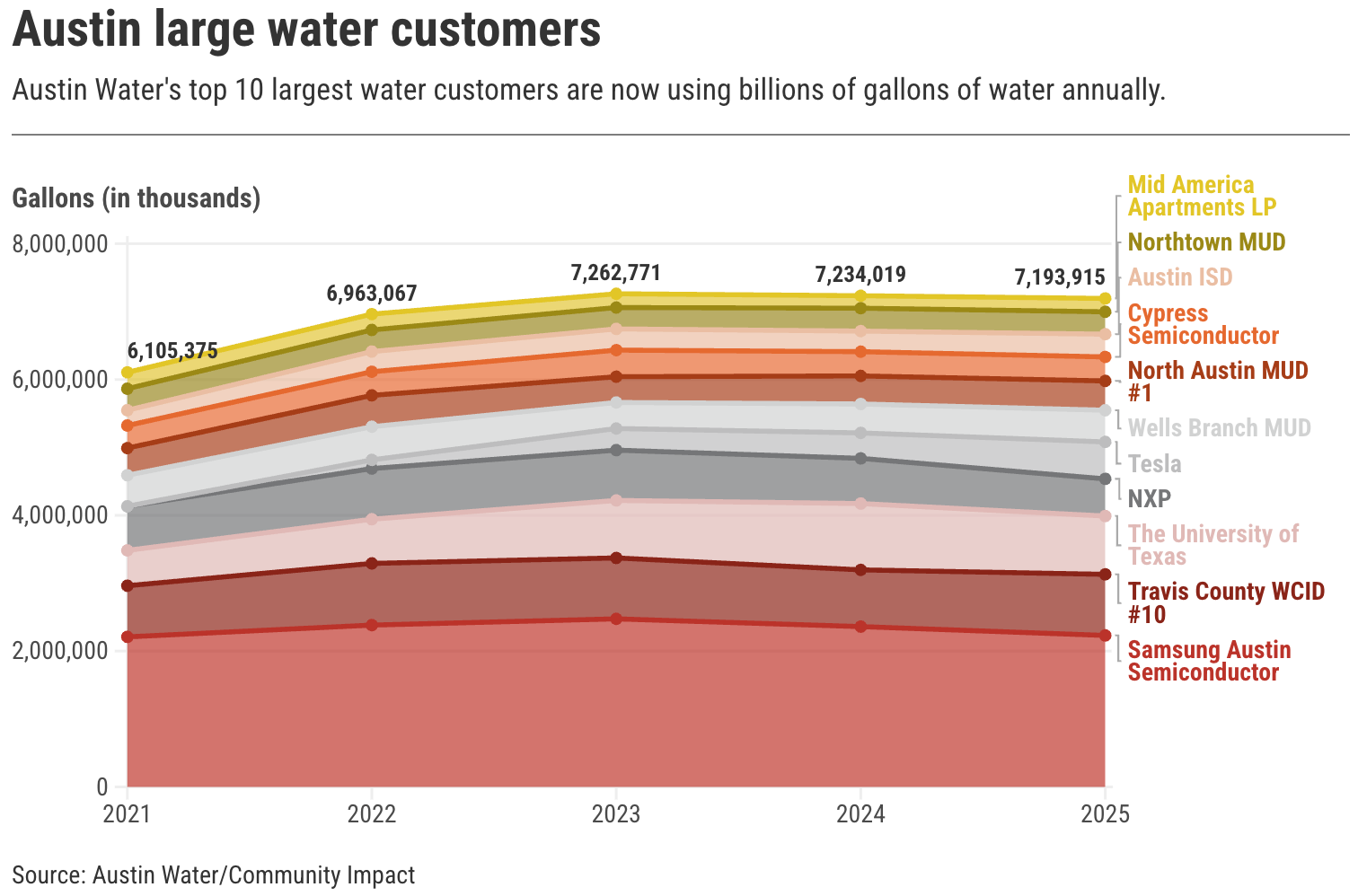
Another common concern is water usage, which is more dependent on local conditions and cooling technology. Austin’s ten data centers used 0.28%, or 131 million gallons, of Austin Water’s total in 2024. By comparison, the city lost 9.3 billion gallons to leaking pipes in 2024, while Samsung Austin Semiconductor alone used 2.36 billion gallons. Evaporative cooling tower designs consume significant water, while closed-loop systems use far less but require more electricity. So although water consumption can matter a lot in a drought-prone state, unlike electricity demand, it is not an inherent consequence of operating a large data center.
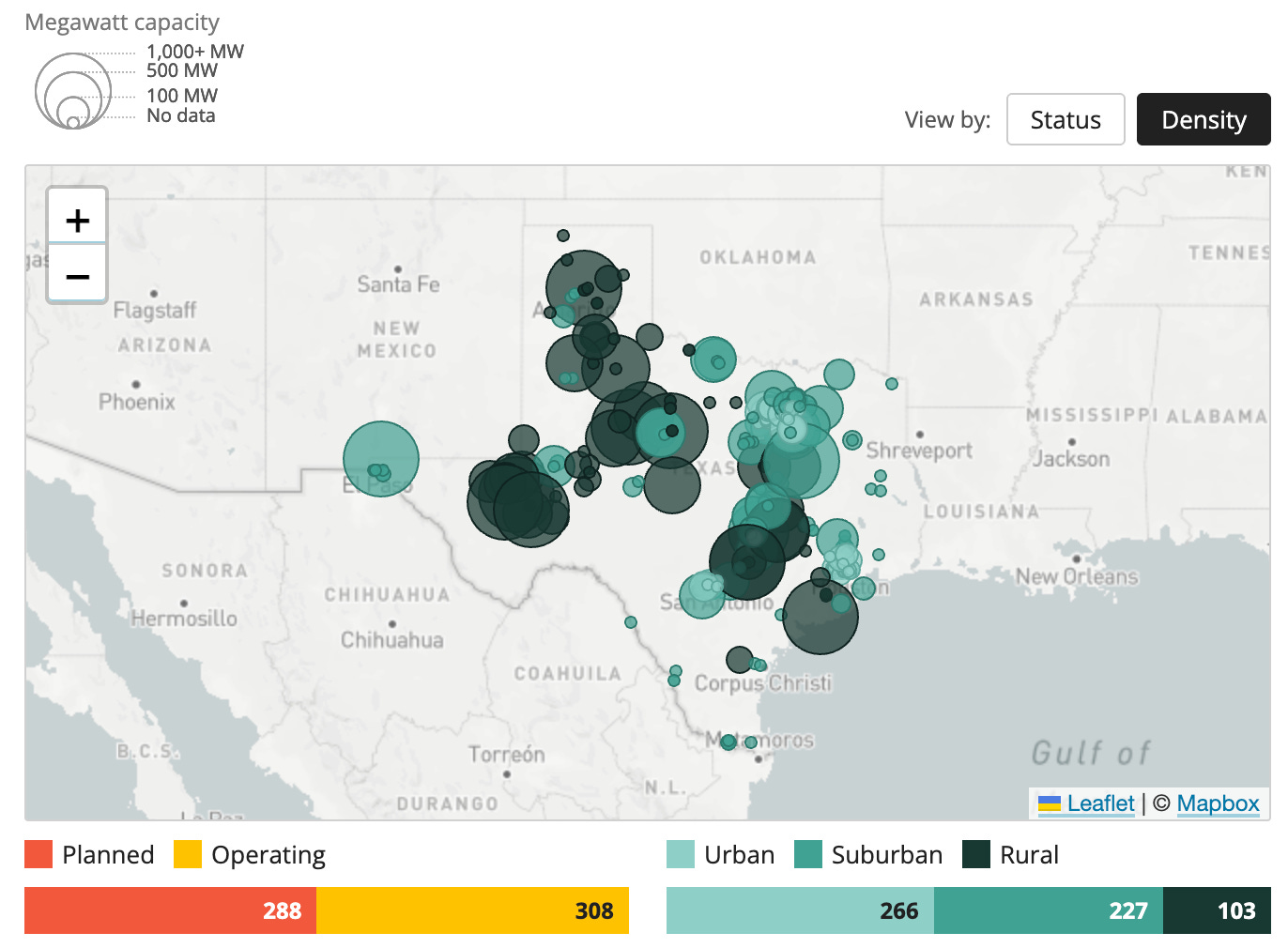
Due to latency, ordinary data centers often need to be located near end users. Traditional data centers can inconspicuously fit into industrial parks or even office buildings, as seen in Chicago. Hyperscale campuses are much larger, requiring anywhere from 200 to 1,000 acres, so they naturally gravitate toward undeveloped land near the urban fringe. The Texas Tribune found that most planned Texas data centers are in urban and suburban counties, with about half of those planned for unincorporated areas around cities—places with fewer development constraints and, in Texas, no zoning.
Two Texas cities, Abilene and San Marcos, illustrate the two temptations policymakers should resist: subsidizing data centers as though they produce no externalities, and banning them as though every project were a public menace.
Abilene, in the West Texas Plains, courted a 1.2-gigawatt, 875-acre data center project with an 85% property-tax abatement. The campus uses closed-loop cooling, so fears about its water use have largely not materialized, but construction on the project brought an influx of 5,000 to 9,000 temporary workers, significantly straining the local housing market and road network, and, residents say, causing rents to double. A new on-site gas plant has also raised air quality concerns. Abilene’s mistake was treating the project as a windfall without accounting for the real costs it would impose on the community.
South of Austin, San Marcos made a different mistake. After rejecting a 200-acre project earlier this year, the city drafted rules that would have allowed data centers as a conditional use in some zones. In June, city council prohibited data centers in every zoning district instead, without setting any size threshold. That blanket ban might violate state law, and State Senator Paul Bettencourt has threatened a legal challenge. More importantly, it does nothing to stop development immediately outside city limits: six projects are already proposed or under construction in Hays County, where the county government has no zoning authority.
San Marcos’s situation is not unique. Cities that ban data centers within their boundaries may simply displace them to areas with less regulatory authority. This matters statewide because, according to the Zoning Atlas, 94% of Texas is non-Tribal, unprotected, unzoned land, versus 36% in New York and 2% in California. (In the map below, the gray areas represent unzoned land.) Simply banning data centers via municipal zoning doesn’t prevent them from hooking up to the grid, drawing on aquifers, or building on open space in unincorporated land.
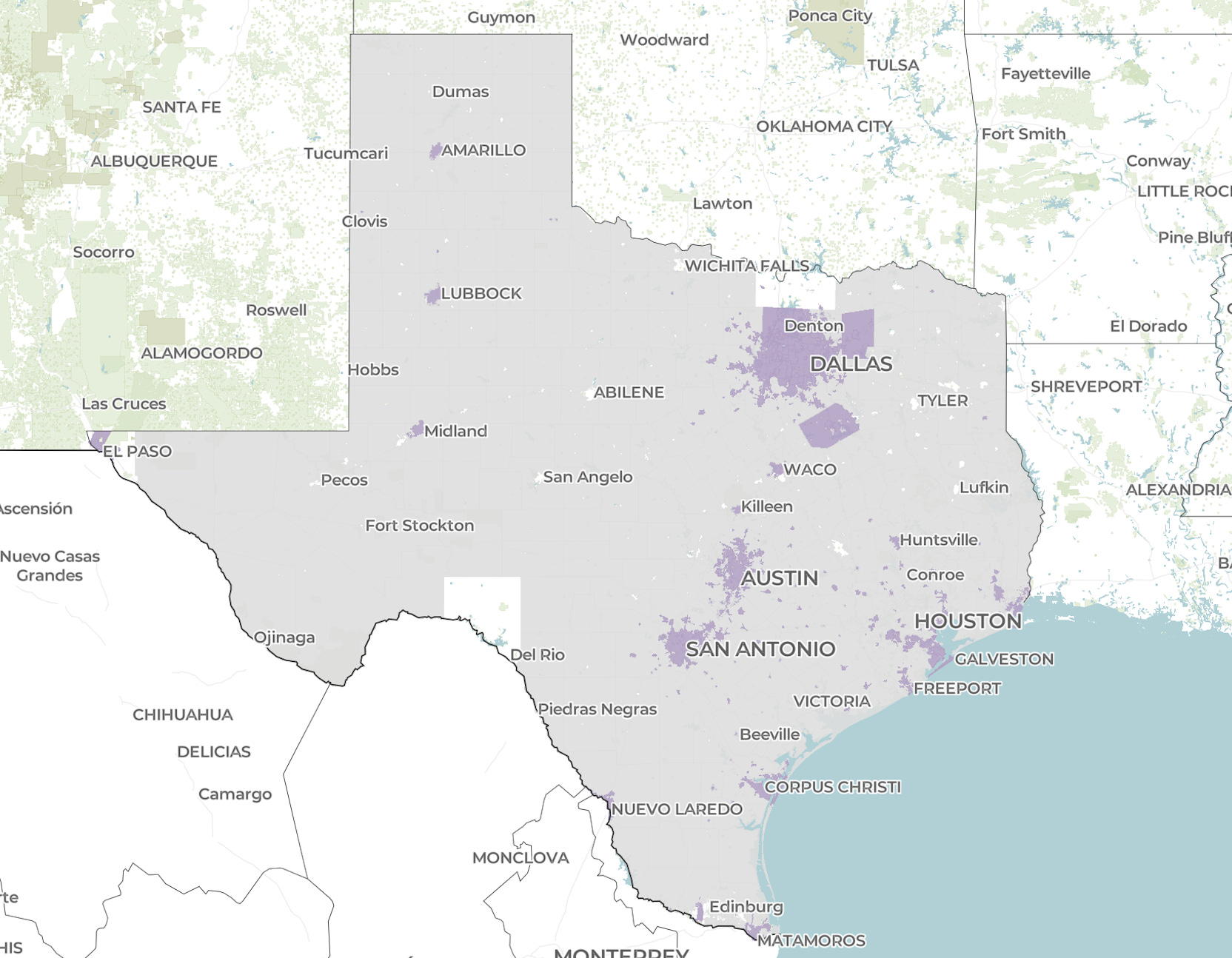
So the onus falls on the state to pursue better policy.
Until the current backlash, Texas had aggressively courted data centers. A 2013 sales-tax exemption is projected to cost the state $3.2 billion over the next two years, while municipalities like Abilene have offered property-tax abatements of their own. But Texas has also begun addressing the actual infrastructure problem. Senate Bill 6, passed in 2025, requires customers over 75 MW to pay for interconnection studies, demonstrate they can cover required upgrades, install equipment allowing ERCOT to cut their power in an emergency, and disclose duplicate requests. Crucially, the law applies to any large load, not merely data centers.
What should the Texas legislature do when it convenes in January?
The legislature should resist punitive policies. Data centers can be enormously valuable to local tax bases, particularly in municipalities facing property-tax revolts. In Loudoun County, Virginia, they occupy less than 3% of the land but generate more than $1 billion in property taxes, roughly a third of the county budget; the county says that revenue helped it lower its property-tax rate substantially. Data centers create relatively few permanent jobs, but many construction jobs, and once operating generally demand few municipal services relative to the tax base they generate. They can also reuse obsolete offices or industrial sites—and even undesirable uses have to go somewhere.
Of course, those property tax savings and other benefits aren’t as compelling if data center demand for power jacks up electricity bills and drains aquifers. Fortunately, there are plenty of potential policy fixes.
One simple fix is to repeal the sales-tax exemption that favors data centers over other industries, an idea that already has bipartisan support. Municipalities should likewise avoid property-tax abatements designed to lure them. Data centers should be neither favored nor punished merely because they are data centers. This may be crazy to say in 2026, but equal treatment under the law should be the starting principle of both taxation and regulation.
Next, there is the grid. In polls, voters frequently cite fears of higher electric bills. Texas regulators have acknowledged that current rules can shift some costs onto residential customers, so one obvious reform is to make large-load customers pay for the infrastructure they require. The Public Utility Commission is already revising its transmission-cost rules, but Texas could also require large-load customers to make long-term minimum payments on their subscribed capacity whether they use it or not. Texas could build on current laws by prioritizing large-load connections that agree to be cut off first in an emergency or that provide their own power.
For water-starved Texas, another sensible fix is to limit potable-water use for cooling where supplies are strained. Austin Water is evaluating conservation plans and water budgets for large users that would set a limit and let customers choose how to meet it. Closed-loop cooling is one obvious way to comply. After a one-time fill, annual use for the whole cooling system is tens to hundreds of thousands of gallons: the Abilene data center project needed about 1 million gallons per building to fill its loops and then roughly 50,000 gallons per building per year thereafter.
Municipalities have other options to help mitigate negative impacts on residents. Zoning rules can limit large-load projects to industrial zones and require setbacks or landscaping. Even better, cities could establish performance standards for water, noise, air quality, heat, and other measurable impacts to determine project appropriateness, whether it is a data center or another large-load customer. Austin already requires certain projects to use reclaimed water or offset some potable-water consumption. Austin Energy requires new customers to pay line-extension costs upfront and those at 20 MW or more to agree to curtail at least half their load during grid emergencies. Learning from Abilene, cities could also prepare for temporary surges in construction workforces by allowing on-site housing during construction.
Austin is now updating its own rules for data centers, which some council members hope will include an outright ban on hyperscale centers. So far, Austin Energy has received 13 inquiries for potential projects of 20 MW but below 75 MW, while Austin Water has received none exceeding 85 million gallons per year. Due to high land values and a limited supply of large acreage, city staff report that nothing approaching hyperscale size has come forward. Nevertheless, staff are bringing forth new non-land-use rules for council consideration this December, and new zoning regulations next spring. A hyperscale ban would be largely performative: such projects are unlikely within city limits, but if one came to the area, it could be located in unincorporated Travis County, where Austin Energy and Austin Water might still be obligated under state law to serve it. The bigger risk is that Austin repeats San Marcos’s mistake by broadly defining “data centers” in the code without distinguishing impacts based on size or load, creating a situation where lower-intensity projects get banned along with hyperscale campuses. Rather than slapping a label onto the land development code, a better approach would map load size or water use to specific zoning categories, such as limiting projects above 75 MW or 85 million gallons a year to heavy-industrial zones, while continuing to allow smaller traditional data centers in lower-intensity categories. Performance standards could then govern the remaining impacts.
Proposals like these don’t land well in the fever pitch of an election year.
Much of the resistance traces to the phrase “AI data center,” which many people equate with the specter of AI taking jobs or, in doomsday scenarios, wiping out all of humanity. But the reality is more mundane. Even if you are not actively querying ChatGPT and Claude, AI is already woven into everyday life in ways most of us never notice. Visa uses an AI model to evaluate every transaction it processes and blocked $40 billion in fraud in fiscal 2023. Google DeepMind’s cyclone model has fed real-time forecasts to the National Hurricane Center since 2025. ERCOT itself already uses machine learning techniques in forecasting and is exploring other ways AI can be deployed for grid management. A Gallup poll found that 99% of Americans had used at least one of six everyday products that run on AI, and 64% had no idea they’d used AI. People don’t realize how much AI they already use—or that it all runs on data centers. But information changes minds: the Rainey Center found that support for data centers rose meaningfully when voters learned about specific safeguards around water, electricity bills, and community benefits.
Whatever your views of AI, it is already here. The question facing states and cities is whether they will manage the impacts of data centers sensibly and responsibly, or err on the side of appeasing angry voters without really reckoning with the tradeoffs. That’s what makes opposing data centers such good politics: it pretends that banning them carries no cost, and that the problems can be contained within city limits. The reality is that, when a municipality bans a data center, it is not stopping the rise of the AI-powered economy; it’s only shifting the costs somewhere else.
Voters do not need to be appeased; they need to be persuaded—by educated leaders. Officials aren’t stuck choosing between subsidizing data centers with abandon and banning them outright; they can weigh the tradeoffs and impose sensible rules. Bad policy rewards anger and ignorance; good policy treats data centers equally and makes them pay what they owe.
If you enjoyed this essay and would like to support more of this work, please consider becoming a paid subscriber. Thank you for reading!
It feels to me that a good governor would lay out the benefits to the state that must be achieved if we're going to build out these data centers. I'd start with something like this :
* Water security (funding desalination plants that equal in capacity the amount of fresh water locked up by data centers). this could be in the form of a tax increment or an apportionment of property taxes or fees or contractual agreements
* grid investment. what portion of grid investment must be completed before a given data center turns on
* light pollution. local regulations should win on light pollution. state establishes minimum requirements, but allows for stricter local regs. including things like red lights, bat- and bird-friendly and night-vision-friendly solutions.
* noise pollution - again state should set the floor, but local governments should have power to set higher standards.
* property tax revenues have to yield more funding for the schools in the districts in which these Data Centers are built, rather than go to state coffers.
this is about creating local benefits. if we do that, there's a good deal to be made.